
Santa Barbara Birding & Beyond: Meet the Zebra Finches
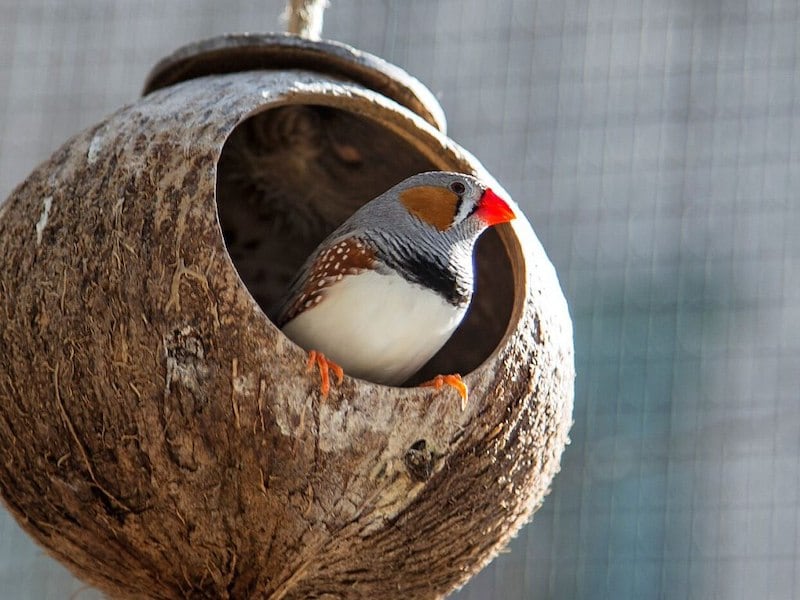
Santa Barbara is a birder's paradise—and there's a corner of Best Western Plus Santa Barbara where guests can stop to admire our resident fine feathered friends.

Step into the courtyard of Best Western Plus Santa Barbara and listen carefully. Tucked between the swimming pool and the Live Oak Café, our zebra finch aviary is one of those rare, unexpected delights that guests remember long after checkout. You'll hear it before you see it—a cheerful chorus of tiny, insistent beeps, not unlike a miniature rush-hour traffic jam, but infinitely more delightful. Our resident zebra finches have been charming hotel guests for generations, and there's truly nothing else like it in Santa Barbara.
For the Birds
The hotel's aviary is home to a lively colony of captivating little zebra finches. The males are the showoffs of the bunch, with bright orange cheeks, vivid red-orange beaks and dapper black-and-white striped chests. Their quieter female companions wear a more understated grey; what they lack in flash, they make up for in personality. Both sport unmistakably fiery eyes that seem to hold the secrets of the universe (or at least an opinion about where you should have breakfast).
We take genuine pride in our aviary. It's not just an amenity, it's a living, breathing community. Watching it has a way of slowing the world down in the best of ways. Families who return year after year make a point of visiting our birds. Children press their noses to the enclosure in wide-eyed wonder. Adults who arrived a bit road-weary find themselves standing there transfixed. We call that the zebra finch effect.
Tiny Birds, Surprisingly Big Science
Here's where our feathered residents get extra interesting. Zebra finches aren't just cute—they're scientifically remarkable. Male zebra finches learn their intricate songs from their fathers, a trait they share with humans and only a handful of other animals, making them one of the most important research subjects in the study of how we learn to speak and communicate.
Even more astonishing? When temperatures rise, father finches sing a special "heat song" to their eggs in the final days before hatching. Researchers found that this song actually alters the physical development of the chicks, helping them adapt to a warmer world before they've even broken through their shells.
And love? These birds take it to heart. Zebra finches are famously monogamous, often pairing for life. Studies have shown that pairs who choose each other freely raise significantly more surviving chicks than those who are matched by outside forces. Compatibility, it turns out, matters as much to finches as it does to the rest of us.
So, the next time you're watching our little colony go about their day—bowing to one another, puffing up their feathers, singing their hearts out—know that you're witnessing one of nature's more quietly extraordinary love stories.
A Paradise for Birders
Our aviary is a wonderful introduction to Santa Barbara's rich birding world. This stretch of the California coast is a gem for birding enthusiasts. Santa Barbara sits along the Pacific Flyway, one of North America's great migratory bird highways, making it a year-round destination for remarkable sightings. The Santa Barbara Botanic Garden, Andree Clark Bird Refuge and the Carpinteria Salt Marsh Nature Park are a few go-to locales for birders, each offering a different habitat and a different cast of feathered characters. Dive deeper into the world of birds at the Santa Barbara Museum of Natural History, which maintains an active ornithology program and is a wonderful resource for visitors who want to learn more about the region's avian life.
Whether you're a seasoned birder with a field guide and a life list, or simply someone who pauses to observe a hawk drifting overhead, Santa Barbara rewards that attention.
Say Hello
So, on your next visit (you don't have to be a hotel guest), step into the Live Oak Café for a meal and wander over to the aviary. Let the finches work their magic on you. Hear the males sing their elaborate songs. Notice how a pair stays close—a few inches apart, always—the way long-bonded couples do.
We can't wait to welcome you and introduce you to a few of our favorite neighbors.